
Retrieval Granularity as Evidence Design in Small-Model RAG Question Answering: A Diagnostic HotpotQA Study
A diagnostic HotpotQA study of how retrieval granularity shapes evidence recovery, answer quality, context budgets, and resource use for small-model RAG.

Beyond Cross-Entropy: Discounted Least Information Theory of Entropy (DLITE) Loss and the Impact of Loss Functions on AI-Driven Named Entity Recognition
An empirical study of DLITE loss and the effect of loss-function choice on AI-driven named entity recognition.

Alternatives to Classic BM25-IDF based on a New Information Theoretical Framework
DLITE theory and its derived methods for term weighting outperformed classic TF*IDF and BM25 for information retrieval.

DLITE: The Discounted Least Information Theory of Entropy
New Information Theory (DLITE) exhibiting properties as an information-theoretic measure and as a metric distance function, including triangular inequality.
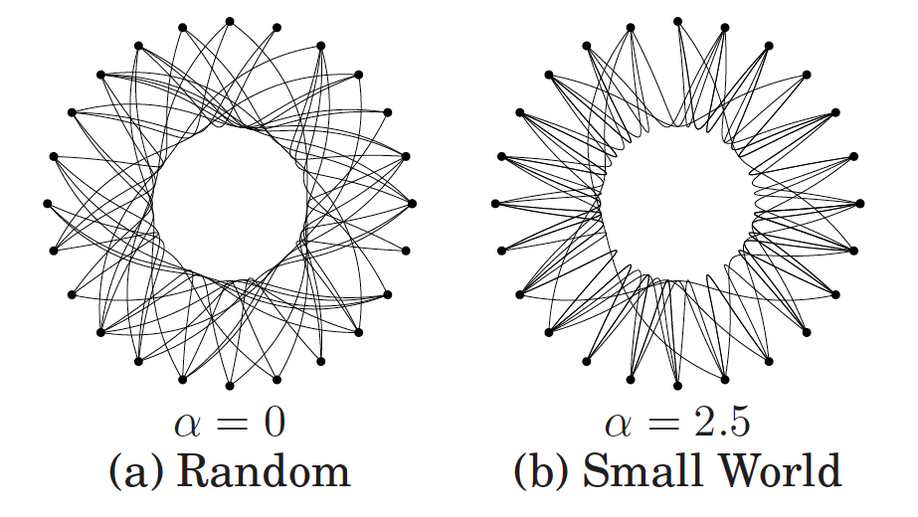
Studying the clustering paradox and scalability of search in highly distributed environments
We study decentralized searches in large-scale information networks and discover the phenomenon of Clustering Paradox, that is, how distributed system interconnect and cluster imposes a limit on search performance and scalability.